
In Microsoft CSP, the invoice is not the event — it’s the receipt that arrives after the event has already happened. That gap is where Microsoft CSP revenue recognition quietly breaks, and it’s why MSPs who build accruals from invoice data alone end up with EBITDA surprises they can’t explain.
Key takeaways
- In CSP, invoices and distributor statements are trailing documents — they confirm what happened, they don’t define when revenue was earned.
- Eight asynchronous timing sources create accrual drift that compounds unless actively reconciled.
- Finance doesn’t need perfect data — it needs repeatable controls, documented tolerances, and a sign-off trail.
- CSP daily reconciliation catches drift while it’s still cheap to fix, instead of as a month-end reversal.
- PSA agreement quantities are the system of record; if the mapping layer is wrong, the GL is wrong.
The Month-End EBITDA Surprise No One Saw Counting
A finance lead closes the month confident in a 22% EBITDA margin. The next month’s journals land a distributor’s late Azure true-up and three backdated NCE credit notes, and £18,000–£25,000 disappears from the P&L.
The business didn’t change. The margin did. That’s the problem with invoice-led accruals in CSP.
Every MSP runs three financial clocks at once: cash (when the customer pays), invoiced revenue (when you bill them), and earned revenue (when the customer actually consumed the service). Only the third clock matters for Microsoft CSP revenue recognition, and it rarely lines up with the other two.
This matters beyond accounting. For MSPs above £2–3M ARR, or those on a PE-backed path, value is set on EBITDA multiples — the median EV/EBITDA for MSPs sits around 8.9x, with margins above 15% commanding roughly 7.02x versus 6.2x below 7.5% (Clearly Acquired / Aventis Advisors, 2024).
At that multiple, a £20,000 accrual swing in a £300,000/month CSP book isn’t noise — it’s a £178,000 valuation event. Bank covenants tied to monthly EBITDA floors add another reason this drift is worth controlling.
Accrual drift is the progressive divergence between revenue that should be recognised — based on service delivery — and revenue actually recorded in the GL based on invoices or cash. In CSP it isn’t a one-off error. It’s a structural condition.
The framing to carry through: CSP is event-driven, not invoice-driven. The invoicing layer sits downstream of a real-time event log of licence adds, removals, suspensions, and Azure metered usage — and that log doesn’t pause for month-end.
Why CSP Timing Breaks Invoice-Led Accruals — The Eight Drift Sources MSPs Miss
Microsoft processes CSP events asynchronously. Licence changes, Azure finalisation, proration, and distributor statements all run on different clocks, and month-end cutoffs are imposed on a system that doesn’t observe them.
Here are the eight drift sources that quietly distort your numbers:
- Mid-cycle licence changes. A customer adds 20 Business Premium seats on the 17th. Under NCE the prorated line (20 × £20 × 15/31 = £193.55) lands on April’s invoice, but the revenue belongs to March. Book it in April and March is understated, April overstated.
- Azure consumption finalisation lag. Azure usage finalises 3–7 days after period end, with distributor invoices arriving 4–12 days into the following month. Booking on receipt systematically delays recognition by 7–12 days every month — a compounding distortion if Azure MRR is growing.
- Delayed distributor charges and credits. Distributor invoice dates range from the 3rd to the 15th of the following month. These are COGS events, but MSPs conflate invoice receipt with revenue entitlement.
- Backdated adjustments and credit notes. A £5,000 credit on the June statement may cover January–March consumption. Book it in June and you distort June margin while leaving Q1 wrong.
- NCE proration on SKU upgrades. A mid-month Standard-to-Premium upgrade generates a credit for unused days plus a new charge — e.g. 50 seats × £12 × 10/30 = £200 credit and 50 × £20 × 10/30 = £333 charge — both relating to the current period but often invoiced next cycle.
- FX and tax rounding. Multi-currency MSPs face variance between the Microsoft billing date, distributor conversion, and customer invoice. Even single-currency books accumulate rounding across hundreds of proration lines.
- Partner margin and discount changes. Pricing changes or expiring promotions alter the cost-sell spread without triggering a customer invoice. If the PSA pricebook lags, recognised margin diverges silently.
- Suspension and reinstatement events. A suspension creates a partial-month credit; reinstatement a partial-month charge — both mid-cycle and processed independently of your billing cadence.
For a £300,000/month CSP book with moderate Azure exposure, these sources can easily reach £25,000–£50,000 of accrual drift over a year if not actively reconciled. That figure is illustrative, but the mechanics are real.
The key point: month-end reconciliation doesn’t solve this. By month-end the events have happened, the accruals are posted or missed, and the correction becomes a reversal — which is exactly the volatility you were trying to avoid. The same manual exposure shows up in manual licence reconciliation.
The Daily Evidence Trail — What Finance Actually Needs to Trust Accruals
Finance leaders and auditors don’t need perfect data. They need evidence — repeatable controls, documented variance thresholds, exception queues, and a sign-off trail.
The real question isn’t “are our accruals exact?” It’s “can we show our accruals are within tolerance, and that we caught and investigated everything outside it?”
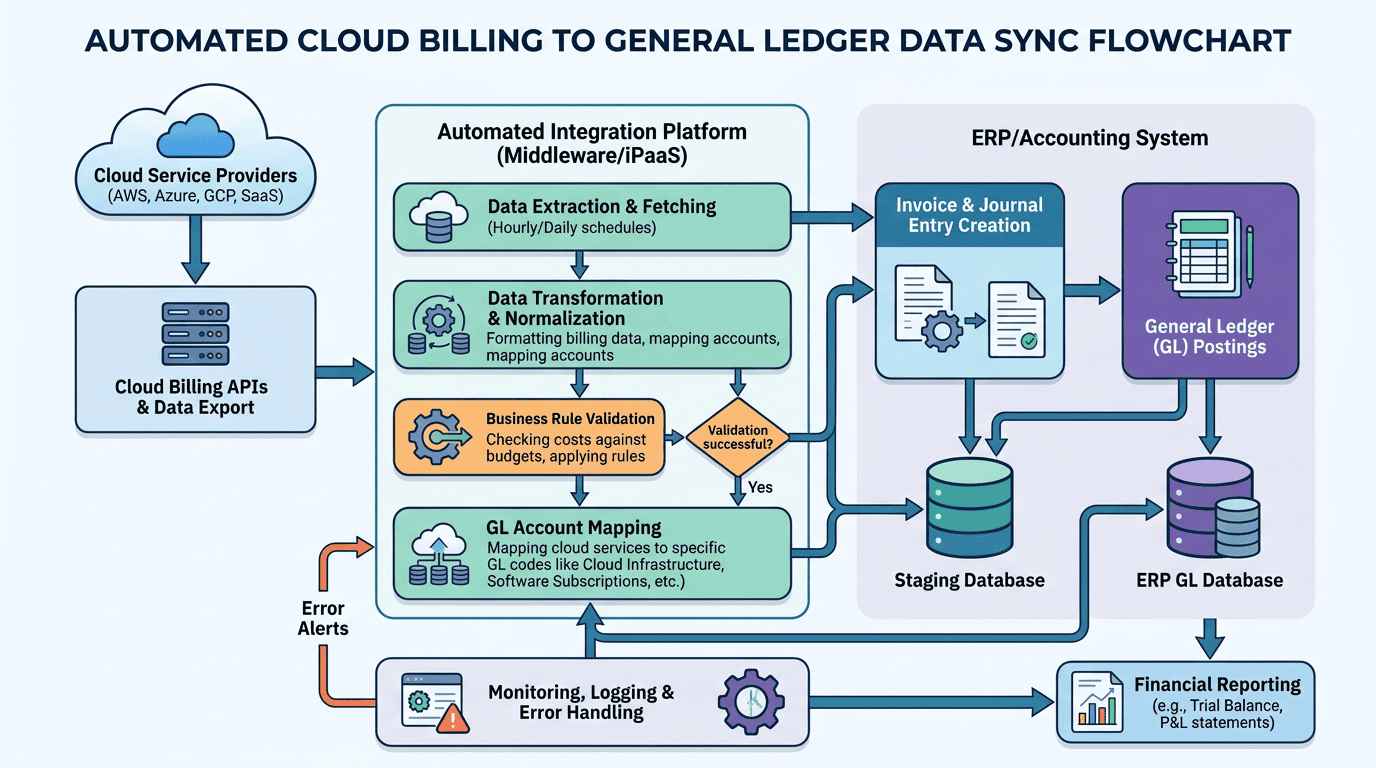
A daily evidence trail isn’t a spreadsheet refreshed at period-end. It’s a continuous chain of custody: Microsoft event → distributor charge → PSA agreement line → customer invoice → GL entry. Any break in that chain is a reconciliation exception to investigate — ideally daily.
Daily
Pull a licence delta report against the prior day’s snapshot: new subscriptions, quantity changes, suspensions, reactivations. Flag any PSA agreement that doesn’t reflect the Partner Center count.
Sync 365’s alerts — “No Billing Profile Assigned”, “Under-Provisioned Licenses”, “Unused Licenses” — support exactly this exception-based review. For Azure, pull month-to-date usage by customer and flag anyone more than 15% above or below the prior month’s equivalent day.
A simple threshold rule: licence changes below £50 per customer per day are auto-classified; anything above triggers a review ticket, calibrated to roughly 0.5% of customer MRR.
Weekly
Reconcile the top 20% of customers by MRR end-to-end: Partner Center quantity → PSA agreement → pending invoice lines → prior GL entry. Finance reviews the MTD Azure consumption billing reconciliation estimate against last week’s and investigates variances over 10%.
Month-end
Finance posts the Azure accrual from MTD usage plus a remaining-days projection, with a documented tolerance (say ±2% of Azure MRR). Anything beyond that becomes a prior-period adjustment when final data arrives.
Retain a point-in-time snapshot of all active subscriptions — portals don’t keep historical state, so without it you can’t reconstruct what was active at period-end. Then produce a three-line report: Billed CSP revenue | Accrued CSP revenue | Timing difference, with named drivers. For example: “Billed £260,000; Accrued £250,000; Difference +£10,000 = £7,000 annual sub billed early + £3,000 Azure under-accrual.”
The controller signs off on the variance report. That sign-off is your audit evidence — repeatable control, not heroic spreadsheet effort.
Platforms like Sync 365 sit between Microsoft Partner Center and the PSA to automate the daily licence delta capture, sync quantity changes to PSA agreement lines with proration, and manage Azure billing — including a “bill in advance” feature that estimates Azure spend upfront and applies a true-up proration when final data arrives. The output is fewer manual journals, not a different accounting policy.
From Accrual Drift to Margin Discipline — The MSP Decision Checklist
Reconciliation is a margin control, not finance hygiene. Every unresolved drift source hides either underbilling — lost revenue — or overclaiming — reversal risk.
The same process that closes the accrual gap also finds the leakage:
- Seats in Partner Center not mapped in the PSA = unbilled licences
- PSA quantities lagging actual counts = missed mid-cycle revenue
- Azure usage above accrual = unrecognised revenue and a positive CSP true-up variance, but only if caught
- Partner margin changes not in the pricebook = silent margin compression
Illustratively, a £300,000/month CSP book with a 3–5% underbilling rate represents £9,000–£15,000/month in avoidable leakage. At 8.9x EBITDA that’s an £80,000–£133,000 annual valuation impact.
PSA billing alignment amplifies or suppresses all of it. The PSA is the system of record — if agreement quantities are wrong, proration, invoices, and the GL are all wrong. The mapping layer from Microsoft SKU to PSA product to billing profile is the failure point most MSPs underinvest in. Mismatched billing profiles, inactive catalog items, and incorrect agreement start dates are all documented ways the sync chain breaks. Understanding your NCE commitment models and subscription-level billing is part of getting this right.
Use this checklist. If you answer “no” or “unsure” to more than three, daily reconciliation should be a priority:
- Can you produce, within 24 hours, every Microsoft licence quantity change in the last 30 days and confirm each is in a PSA agreement?
- Do you have a documented Azure accrual methodology with a defined tolerance that finance signs off monthly?
- Do you retain a point-in-time subscription snapshot at each period-end?
- Do you have a written policy for reclassifying backdated credits to the correct period?
- Is your PSA pricebook reconciled against Microsoft/distributor pricing at least monthly?
- Can you explain, in writing, the drivers of any timing difference between billed and accrued revenue last month?
- Does finance receive a variance report with named drivers before close — not after?
If the honest answer to questions one through three is “we rely on manual exports”, that’s the process risk. The tooling standard is automated daily licence delta capture, proration-aware PSA sync that timestamps every change, Azure billing with advance-estimate and true-up, an exception queue with documented resolution, and a retained historical record you can query per period.
There’s a maturity ladder here. Early-stage MSPs recognise revenue on invoice date. Intermediate MSPs do month-end Microsoft CSP accruals from distributor data. Advanced MSPs maintain a daily evidence trail tying Microsoft events to PSA agreements to GL entries, with documented tolerances and a sign-off record.
Investors, acquirers, and lenders have learned to ask which level they’re dealing with — and the answer affects the price. If three or more of those questions gave you pause, it’s worth understanding what automated daily reconciliation evidence actually looks like in practice.
Want accrual evidence before the next close?
If Microsoft CSP timing gaps, PSA agreement changes, or Azure true-ups are making month-end accruals harder to trust, Sync 365 can help your team reconcile Microsoft activity against PSA billing records daily — before the variance becomes another finance surprise.
Book a Sync 365 demo to see how daily Microsoft licence and Azure billing reconciliation can support cleaner accrual evidence for your MSP.